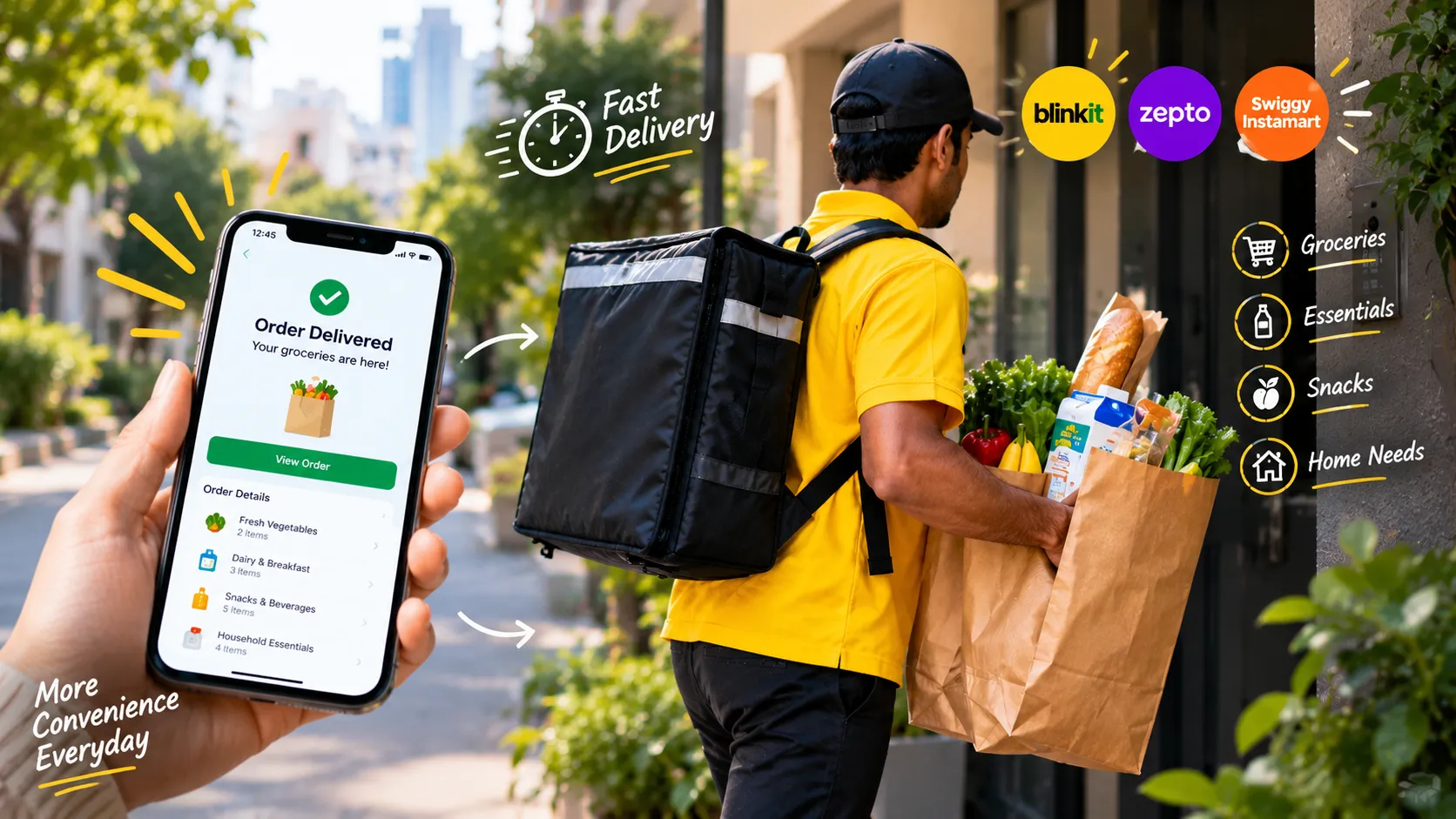
Ordering groceries, snacks and household essentials online has become increasingly convenient for Indian consumers. Platforms such as Blinkit, Zepto and Swiggy Instamart have helped popularise quick commerce, a business model focused on delivering everyday products within a short period.
Convenience is one of the biggest attractions. Instead of travelling to a nearby store, customers can browse products, compare prices and place orders through a mobile app. These services are especially useful for people with busy schedules or lastbminute shopping needs. The platforms offer groceries, beverages, personal care products and various household essentials. Promotions, discounts and app based recommendations can also influence what customers purchas
Quick commerce makes shopping easier, but frequent ordering can encourage impulse purchases. Small orders may appear inexpensive individually, yet delivery fees, platform charges and repeated purchases can increase monthly spending. For businesses, the model creates opportunities to reach customers digitally. However, competition, delivery costs, inventory management and profitability remain important challenges.
Quick commerce is becoming an important part of India digital retail landscape. Its long term success will depend on customer retention, reliable service, competitive pricing and sustainable business operations. For consumers, the best approach is to compare prices, check additional charges and distinguish between essential purchases and impulse buys before placing an order.