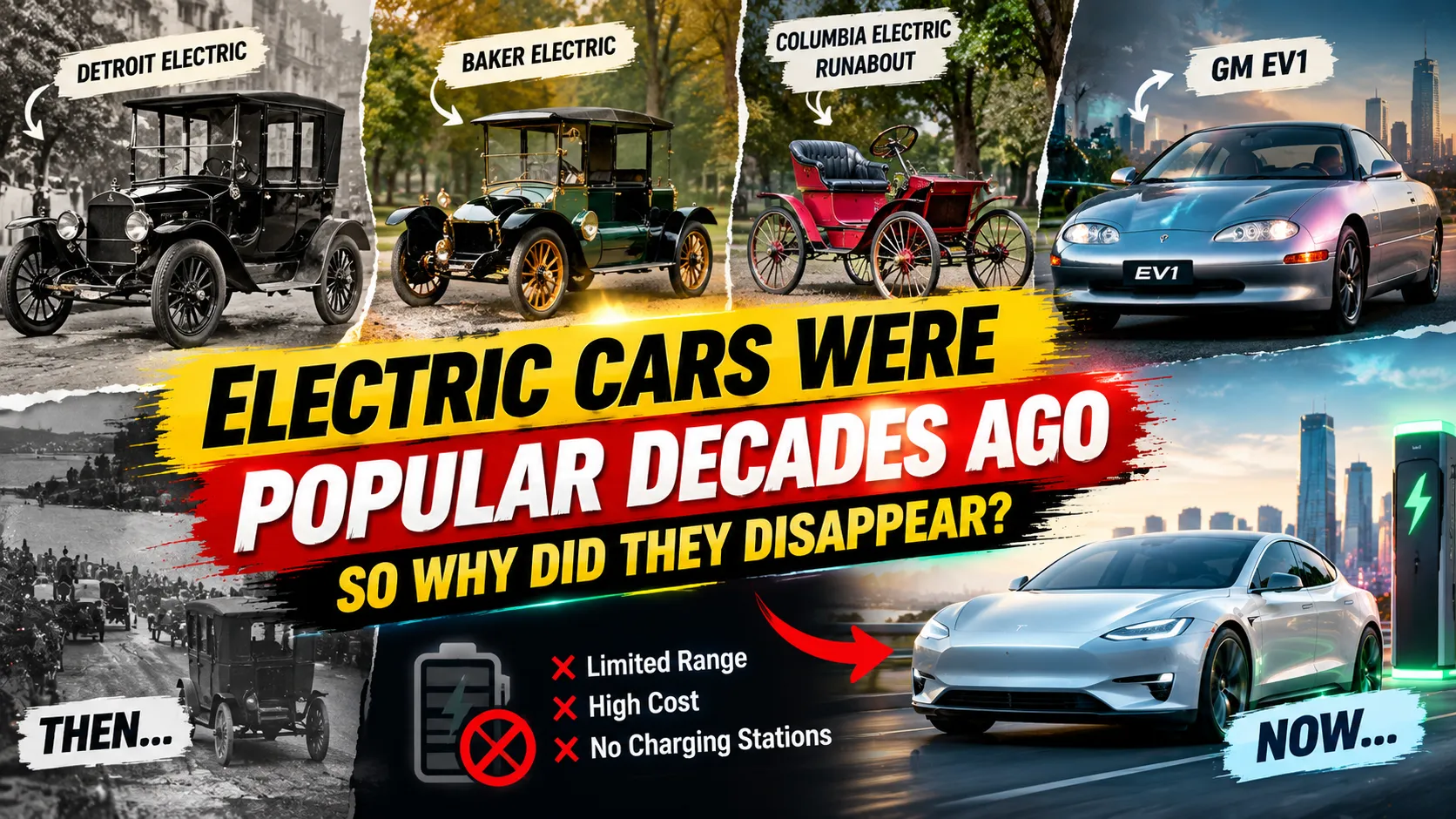
Electric cars are often seen as the future of the automobile industry. However, their history is much older than many people think. Electric vehicles were being developed almost 200 years ago, and they became popular in some parts of the world before petrol cars took over. A recent report by ABP Live looks at five electric vehicles that appeared decades ago but later disappeared from the market. One of the important models was the Detroit Electric, which was known for its quiet and comfortable drive. Another was the Baker Electric, which was mainly used for short journeys in cities. The Columbia Electric Runabout was also popular among early electric vehicle users.
In 1996, General Motors introduced the EV1, a modern electric car designed especially to run on battery power. It had a smart design and showed that electric cars could be more advanced than earlier models. However, the company later ended the EV1 programme because of high production costs and business challenges. So, why did these electric cars disappear? The main reasons were limited battery range, high prices and a lack of charging stations. At the same time, petrol cars became cheaper, could travel longer distances and had better access to fuel.
Today, electric cars are returning with improved batteries, faster charging and better technology. Their history shows that the idea of electric mobility is not new, but making it practical and affordable has taken many years.