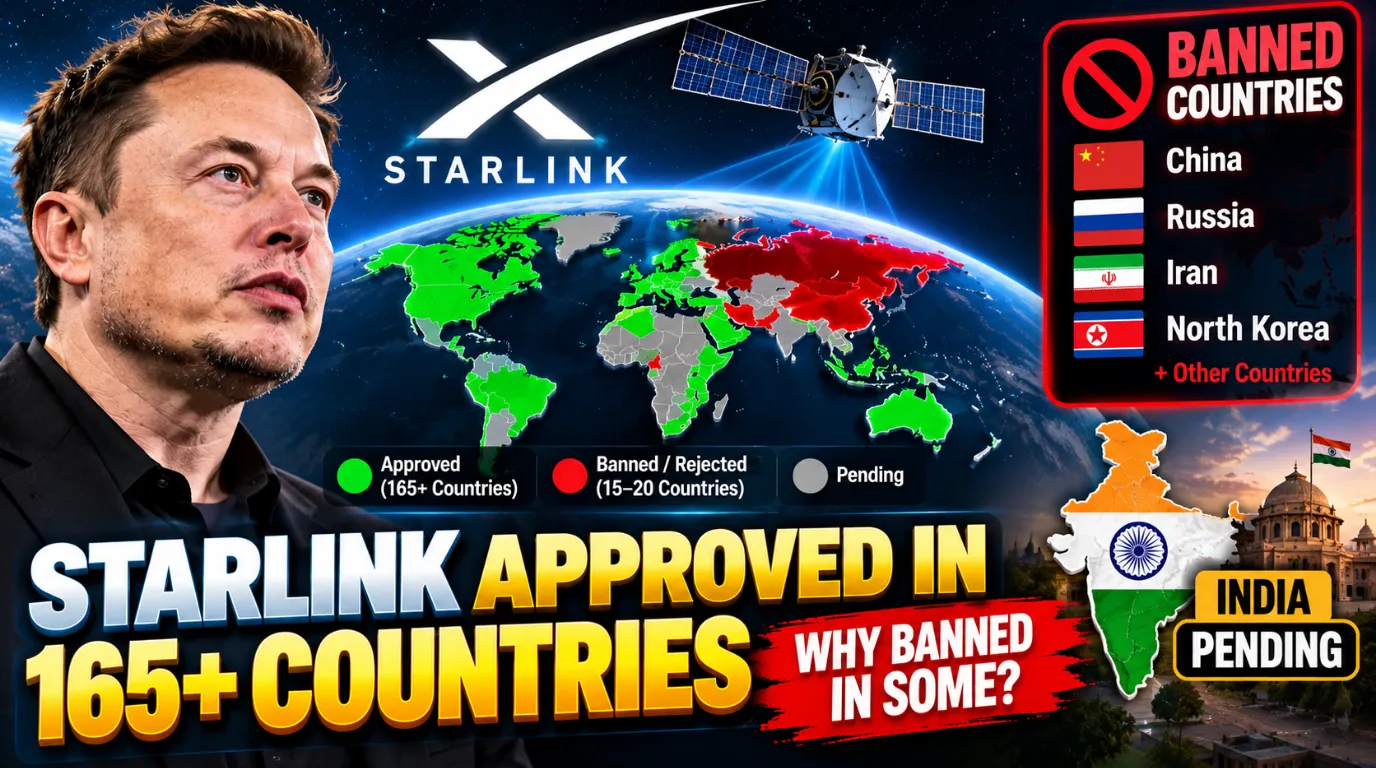
Elon Musk highspeed satellite internet service, Starlink, owned by SpaceX, has expanded across the world at a rapid speed. However, while over a hundred nations have welcomed the service, several powerful countries continue to reject or block it due to strict security and local data laws.
As of today, Starlink is officially licensed and approved to operate in more than 165 countries and territories worldwide. Millions of active users across North America, Europe, Australia, and parts of Asia and Africa rely on its low Earth orbit satellites for fast internet access in remote locations.
On the other hand, around 15 to 20 countries have banned or rejected Starlink outright. Nations like China, Russia, Iran, and North Korea strictly prohibit the service. These governments argue that Starlink poses severe national security risks because it operates outside local military monitoring and state controlled firewalls. Other countries like South Africa and Namibia have delayed approvals because SpaceX did not meet local ownership rules.
Meanwhile, India remains in a pending status. Starlink has secured key preliminary licenses from the Department of Telecommunications (DoT), but final commercial clearance is awaiting security approval from the Ministry of Home Affairs and spectrum price allocation. While Starlink promises high speed internet for India rural areas, security checks remain the top priority before giving the final green light.