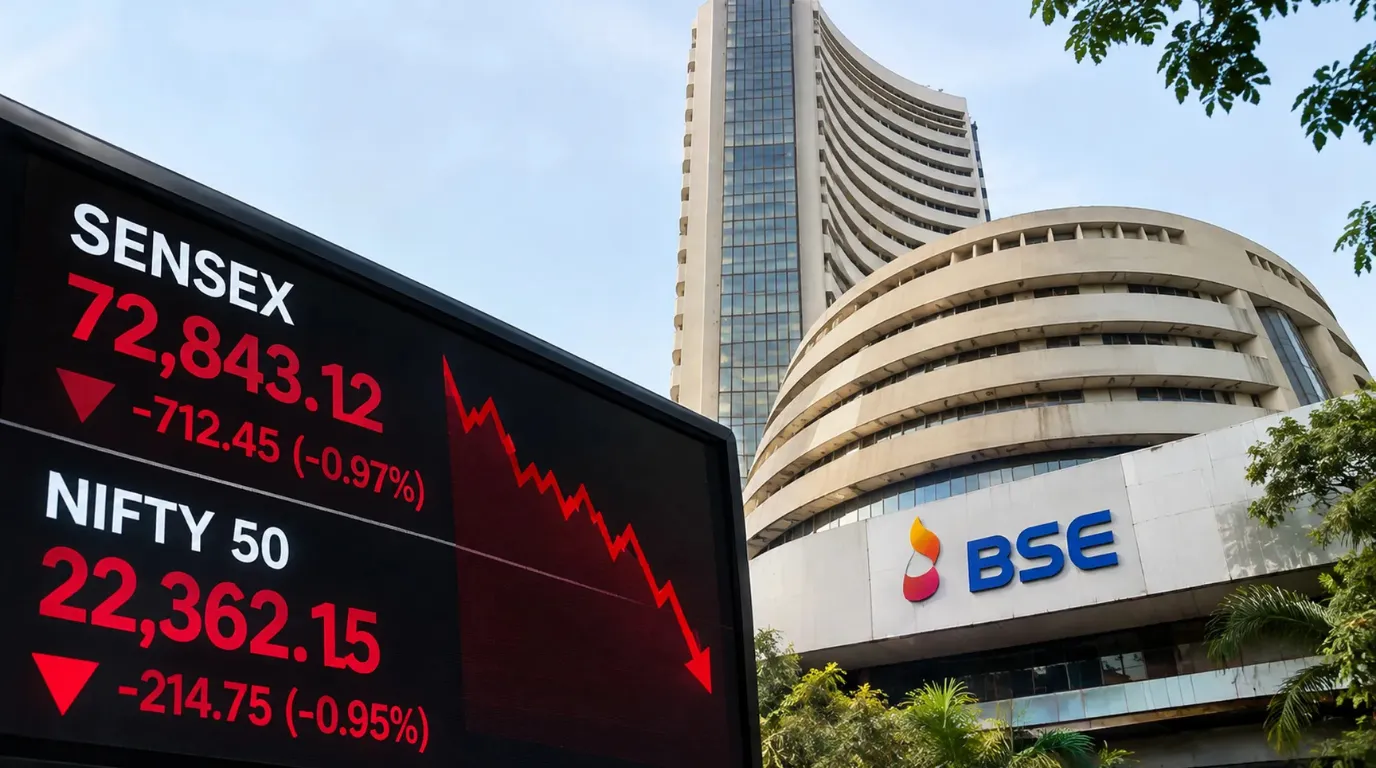
The Indian stock market is facing strong selling pressure, with the BSE Sensex reportedly falling more than 700 points and the NSE Nifty 50 slipping below the 22,400 mark. The decline has raised concerns among investors, who are watching market movements and looking for reasons behind the fall. Several factors can cause the stock market to decline. One major reason is weak global market sentiment. When markets in the United States and other major economies fall, investors in India may also become cautious.
Another possible reason is selling by foreign institutional investors (FIIs). When foreign investors withdraw money from Indian equities, it can put pressure on share prices and major market indices. Concerns about inflation, interest rates, crude oil prices and economic growth can also affect investor confidence. Higher oil prices, in particular, may increase costs for Indian businesses because the country imports much of its crude oil.
Profit booking is another common reason for market declines. After a period of gains, some investors sell shares to secure their profits, leading to temporary market pressure. The fall in the Sensex and Nifty 50 highlights the importance of following market news and understanding investment risks. However, one session of losses does not necessarily mean that the market will continue falling. Investors should avoid making rushed decisions based on panic. Instead, they should review company fundamentals, maintain a long-term perspective and consider their financial goals before making investment decisions.