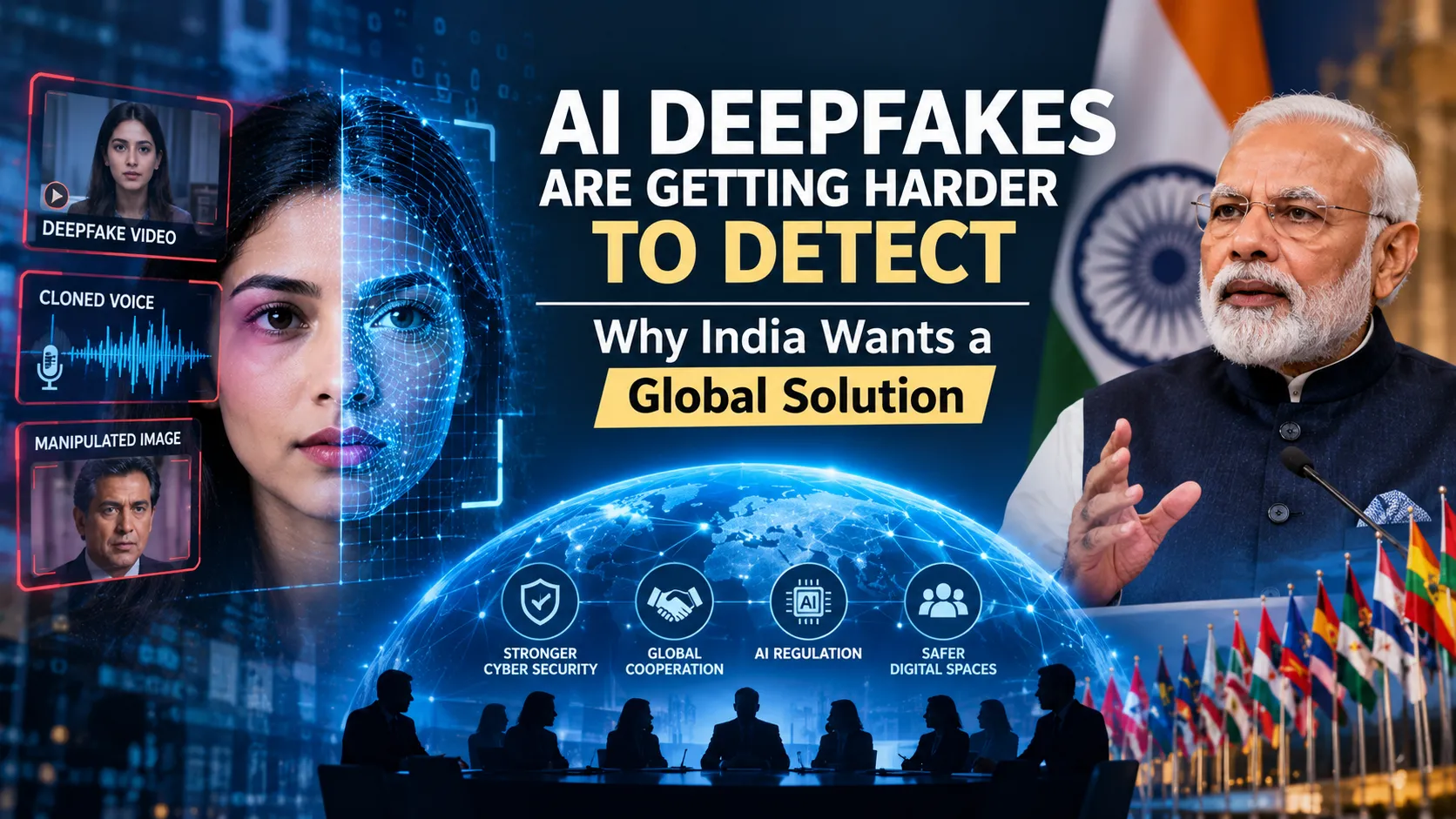
Artifical intelligence is making digital content more realistic than ever, but this progress is also making deepfakes increasingly difficult to detect. From fake videos and cloned voices to manipulated images, AI-generated content can now look and sound convincing enough to mislead people online.
The growing threat has prompted India to push for stronger international cooperation. Prime Minister Narendra Modi has called for a global mechanism to tackle deepfakes and cross border cyber fraud, highlighting the need for governments, technology companies, telecom operators and financial institutions to work together.
The concern is particularly important because deepfakes can spread across borders within minutes. A fake video created in one country can be uploaded to a social media platform, shared by users around the world and potentially used to spread misinformation, damage reputations or carry out financial scams.
India is also looking at stronger measures to address AI related risks. The government is working towards a broader AI regulatory framework, with concerns surrounding deepfakes, AI generated content, consent and accountability expected to be part of the discussion.
Experts and policymakers increasingly believe that detecting deepfakes cannot be the responsibility of one country or one technology platform alone. A global approach could help establish common standards for identifying AI generated content, improving digital verification and responding quickly to harmful material. As AI technology continues to advance, the challenge is becoming bigger than simply asking whether a video or image is real. The bigger question is whether people can continue to trust what they see and hear online.