
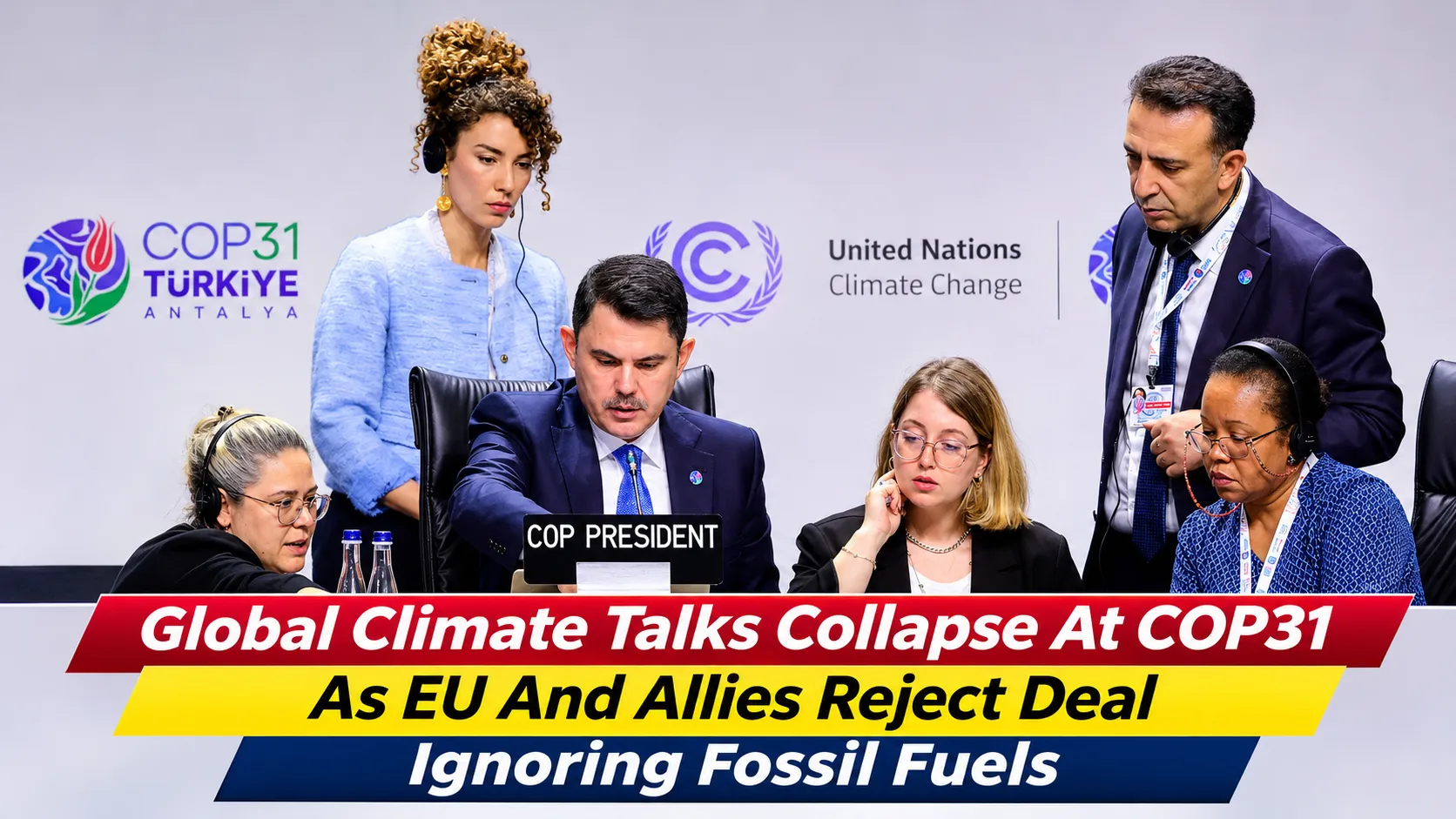
In a major setback for global climate action, the United Nations COP31 climate summit in Antalya, Turkey ended on Sunday without a final agreement after running into record overtime. The high stakes negotiations collapsed after the European Union, the United Kingdom, Panama, and several vulnerable island nations formally rejected a proposed climate pact because it completely omitted any mention of phasing out fossil fuels.
Despite nearly two weeks of intense discussions and more than forty hours of extra negotiations, oil producing countries pushed back strongly against naming coal, oil, and gas in the final Antalya pact. Speaking for the European Union, Irish Environment Minister Darragh O Brien stated that member states refused to accept any climate agreement that greenwashes fossil fuels or moves backward from earlier promises made in Dubai.
United Nations Secretary General Antonio Guterres expressed deep frustration over the breakdown, warning world leaders that while diplomats failed to reach consensus, there is no doubt in the science behind rising global temperatures. Meanwhile, developing nations across Africa and Asia also voiced anger over slow financial aid needed to fight extreme weather disasters. For India and millions of people facing severe heatwaves, floods, and erratic monsoons every year, this deadlock raises fresh concern over how quickly wealthy nations will fund clean energy and climate protection.