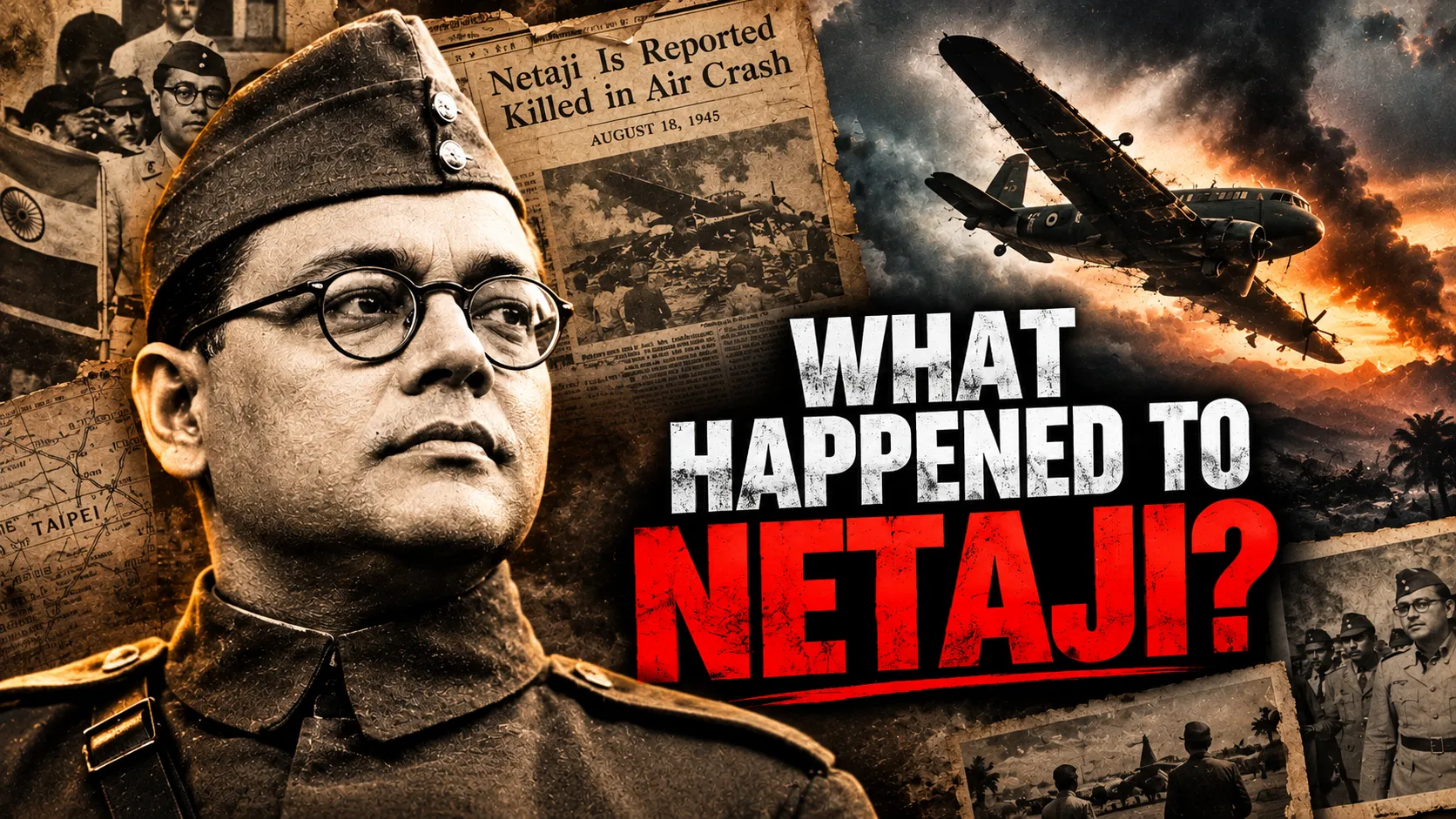
Netaji Subhas Chandra Bose remains one of India most courageous and beloved freedom fighters. By creating the powerful Azad Hind Fauj (Indian National Army), he challenged British rule and inspired millions of countrymen to fight for full independence. However, his sudden disappearance in August 1945 gave birth to India greatest modern mystery. For over eight decades, citizens have asked the same tragic question, did Netaji truly die in a fatal accident, or did he manage to survive?
According to official British and Japanese records, Netaji boarded a overloaded Japanese bomber aircraft on August 17, 1945. The plane reportedly suffered engine failure and crashed shortly after takeoff from Taihoku Airport in Japanese occupied Taiwan. Reports state that Netaji received severe third degree burns while trying to escape the burning wreckage and passed away later that night in a nearby military hospital. His ashes were subsequently preserved at the Renkoji Temple in Tokyo, Japan.
Despite these claims, millions of Indians refused to accept the official story. Critics highlighted major flaws in the narrative, including the total absence of crash photographs, missing death certificates, and conflicting statements from eye witnesses. Over time, wild theories began to surface across India. Some believed Netaji escaped to Russia to seek political support, while others claimed he returned home secretly and lived as a holy hermit named Gumnami Baba in Uttar Pradesh.
To uncover the truth, the Indian government set up three major official enquiry committees, the Figgess Committee, the Shah Nawaz Khan Committee, and the Khosla Commission. While early reports supported the official plane crash theory, the Justice Mukherjee Commission in 2005 completely rejected it, stating that no crash actually happened at Taihoku Airport on that day. Although many classified government documents have been made public in recent years, the true fate of India heroic leader remains an unsolved puzzle that continues to touch every Indian heart.