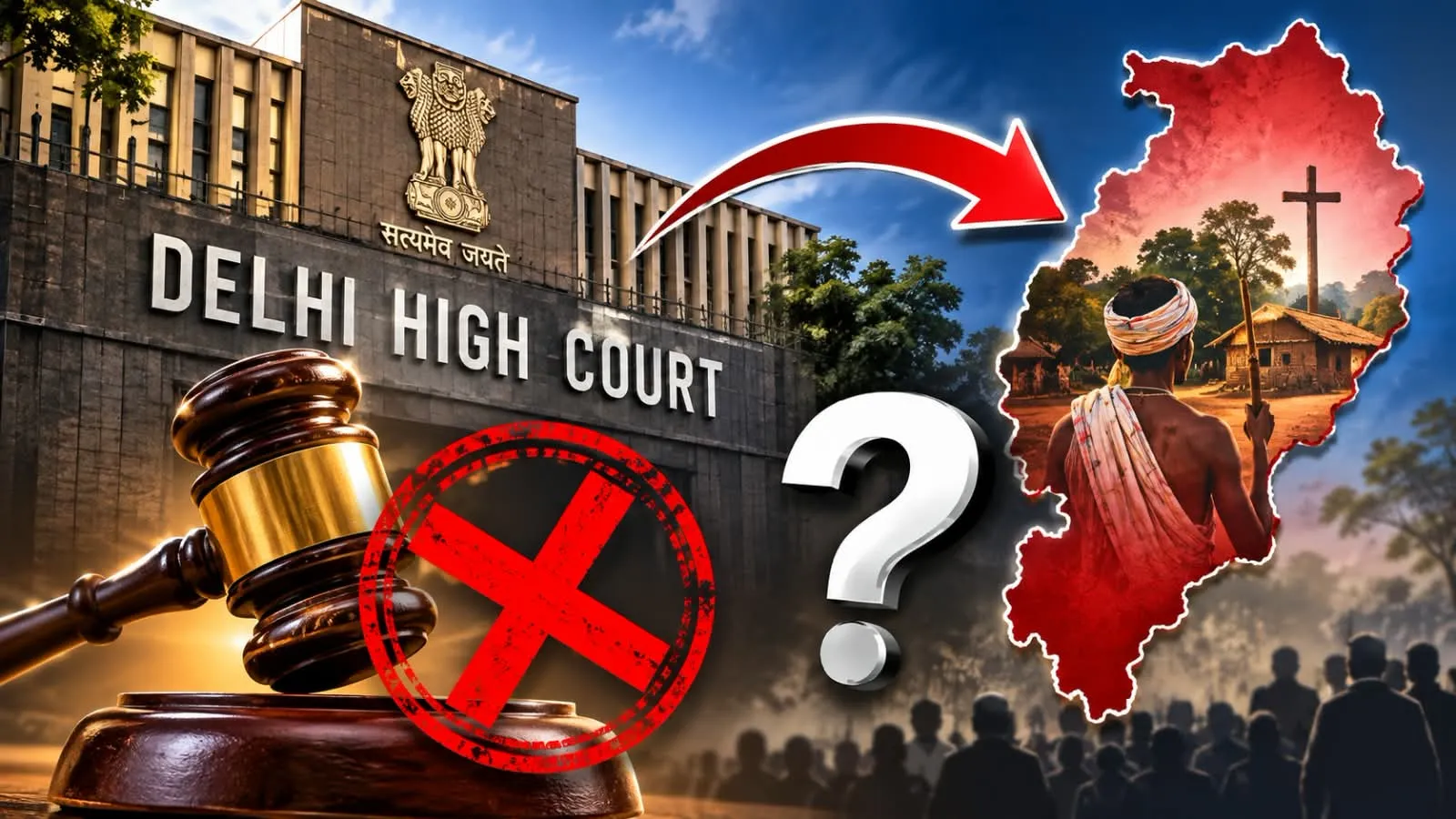
Walking into a courtroom in New Delhi to fight a battle rooted hundreds of miles away in Chhattisgarh turned out to be a legal dead end this week. According to recent reports by LiveLaw and Bar and Bench, the Delhi High Court declined to hear a petition alleging forced religious conversion of Adivasi families in Chhattisgrah's Sukma district.
The legal twist was not about whether the March 2026 allegations were true. Instead, the case hit a wall over jurisdiction. Petitioner Baman Ram Kawasi had first approached the National Human Rights Commission and later moved the Delhi High Court, claiming that since the commission sits in the national capital, Delhi judges could step in.
On November 19, Justice Swarana Kanta Sharma politely shut that door. The court ruled that simply having a central office in New Delhi does not turn every regional dispute across India into a Delhi High Court matter. With the village, the witnesses, and the local authorities all located in Chhattisgarh, the court noted that the petitioner had not even included the Chhattisgarh government or Sukma officials in the case. Relying on the principle of forum conveniens, the court stepped back without commenting on the claims. For the petitioner, the message was clear, take this fight back to the Chhattisgarh High Court where the story actually began.